WiPDA-Asia 2027

WiPDA-Asia 2027

Keynote speakers

Invited talks from academia, industry, and research institutes.

Keynote talks run through August 22-25, 2027, covering each of the three workshop topics. Abstracts and biographies are published here as they arrive.

  • Special Address

    Prof. Hiroyuki Matsunami

    Kyoto University of Advanced Science, Japan

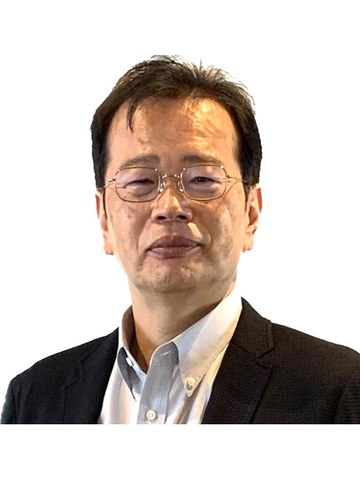
  • Prof. Tsunenobu Kimoto

    Devices

    Prof. Tsunenobu Kimoto

    Graduate School of Engineering, Kyoto University, Japan

    Physical Understanding and Performance Enhancement of SiC MOSFETs

  • Devices

    Dr. Kazuhide Ino

    ROHM Semiconductor Ltd., Japan

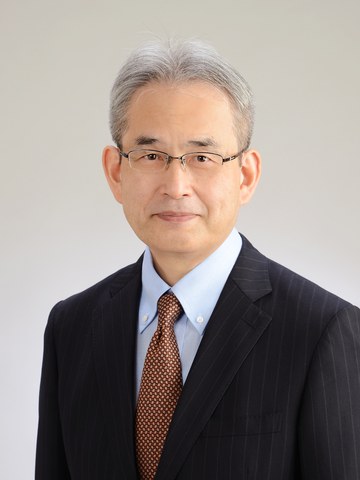
  • Prof. Yoshikazu Takahashi

    Packaging

    Prof. Yoshikazu Takahashi

    Center for Innovative Integrated Electronic Systems (CIES), Tohoku University, Japan

    Advanced Power Modules and Gate Control Technology for Maximizing the Performance of WBG Devices

  • Packaging

    Dr. Shiori Idaka

    Mitsubishi Electric Europe, Germany

  • Applications

    Prof. Jin Wang

    The Ohio State University, USA

  • Applications

    Dr. Kimimori Hamada

    Huawei Technologies Japan, Japan

Prof. Tsunenobu Kimoto

Devices

Physical Understanding and Performance Enhancement of SiC MOSFETs

Prof. Tsunenobu Kimoto

Graduate School of Engineering, Kyoto University, Japan

Abstract

High-voltage SiC power MOSFETs and Schottky barrier diodes have been penetrating the major market including HEV/EV, traction, and data centers, demonstrating remarkable energy saving. However, the performance and reliability of SiC power MOSFETs have been still far from their full potential. In the first part of this talk, recent progress in physical understanding of SiC MOSFETs such as carrier transport and trapping in the inversion layer is presented. Systematic MOS-Hall effect measurements combined with split C-V characteristics yield free electron (real) mobility, free electron density, and trapped electron density as a function of the gate voltage. These data can be successfully reproduced by theoretical calculation taking account of several scattering processes, doping-dependent fixed charges, and quantum-mechanical effects. In the second part, a great promise of SiC FinFETs is demonstrated by means of experimental fabrication and theoretical analyses. A high mobility (> 100 cm2/Vs) has been achieved for a SiC FinFET with a narrow fin width, where the spatial distribution of electrons is shifted away from the MOS interface, leading to less Coulomb scattering. By adopting the Fin-channel in SiC vertical MOSFETs, a record performance has been achieved. Social impacts of SiC power devices are also presented.

Biography

Tsunenobu Kimoto joined Sumitomo Electric Industries, Ltd. after receiving the Master degree from Kyoto University in 1988. He started his academic career as an Assistant Professor in 1990 and received the Ph.D. degree from Kyoto University in 1996 based on his work on SiC epitaxial growth and high-voltage diodes. From 1996 to 1997, he was a research fellow at Linköping University, Sweden. He is currently a Professor at Kyoto University. His main research activity has been SiC electronics including SiC power devices, high-temperature devices, MOS physics, ion implantation, optical and electrical characterization, point and extended defects, and epitaxial growth. He received the IEEE Andrew S. Grove Award in 2024 and the Japan Academy Prize in 2026. He served as the President of the Japan Society of Applied Physics in 2024 and 2025. He is the coauthor of the book "Fundamentals of Silicon Carbide Technology" (IEEE-Wiley, 2014).

Prof. Yoshikazu Takahashi

Packaging

Advanced Power Modules and Gate Control Technology for Maximizing the Performance of WBG Devices

Prof. Yoshikazu Takahashi

Center for Innovative Integrated Electronic Systems (CIES), Tohoku University, Japan

Abstract

Recent research and development on wide bandgap (WBG) power devices, such as SiC and GaN, has made remarkable progress, and their contributions are becoming increasingly significant in a wide range of power electronics applications, including EV inverters, DC-DC converters, solid-state transformers (SSTs), 800V DC power supplies for AI data centers, and renewable energy power systems.

Against this backdrop, the importance of power modules capable of maximizing the advantages of WBG devices is steadily increasing, and the underlying technologies are also advancing by leaps and bounds.

In this presentation, I will explain two state-of-the-art power modules developed by our team, as well as two advanced gate drive technologies: (1) technology related to double-sided cooling power modules and water-cooling units designed with the highest priority on ease of manufacturing, ease of parallel connection, thin profile, and low-noise performance; (2) 3D power modules that employ a two-layer water-cooling system to achieve low inductance, high heat dissipation, and a compact size; (3) gate control technology that controls high-speed WBG devices in nanoseconds to suppress current concentration caused by switching time variations; and (4) technology that enables miniaturization of power units and low-noise operation by introducing wireless power supply to the gate power source. I will explain these cutting-edge power module technologies and gate control technologies in detail.

Biography

Professor Yoshikazu Takahashi graduated from Waseda University in 1982 and joined Fuji Electric Co., Ltd. He received his Ph.D. from Yamanashi University in 1998. At Fuji Electric, he was primarily responsible for the development of high-capacity semiconductor technology and power module technology. Subsequently, he served as the director of the power module development center and as chief engineer.

From 2017 to the present, he has served as Professor and Director of the Research and Development Division at the Center for Innovative Integrated Electronic Systems, Tohoku University. From 2018 to 2023, he served as Deputy Program Director for the Cabinet Office's Second-Phase SIP "Energy Systems for an IoE Society". From 2021 to 2025, he served as Principal Investigator for the Ministry of Education, Culture, Sports, Science and Technology's "INNOPEL, Power Electronics Circuit Systems area".

He is a recipient of the 47th Encouragement Award for Electrical Science and Technology, the 17th STS Award, and the NE Power Electronics Award 2024 Grand Prize.